The Problem With Puppy Mills & Irresponsible Breeding
The term puppy mill generally refers to large-scale commercial breeding operations that prioritize the volume of puppies produced over the health and wellbeing of the dogs involved. While not every irresponsible breeder operates at the scale typically associated with the term puppy mill, the underlying issues are often similar: dogs bred too frequently without adequate recovery time, inadequate veterinary care, poor living conditions, and minimal attention to socialization or individualized care for puppies.
Families searching for Goldendoodle puppies for sale or Labradoodle puppies for sale online will likely encounter a wide range of sellers. Unfortunately, the high demand for doodle breeds has attracted some breeders who prioritize quick turnover and profit, sometimes at the expense of the health and temperament of the puppies they produce. You can see the results of our approach in our currently available puppies.
We believe that education is one of the most powerful tools families have when navigating this landscape. By understanding what responsible breeding looks like and asking the right questions, families can make more informed decisions and support breeders who are genuinely committed to the health and wellbeing of their dogs.


Our Core Breeding Principles
Health-Tested Parent Dogs
Parent dogs are selected not only for temperament and structure but also based on appropriate health screening relevant to known concerns in Labrador Retrievers, Golden Retrievers, and Poodles.
Home-Whelped Litters
All of our litters are whelped and raised inside our home in a clean, comfortable, climate-controlled environment — not in an outbuilding, garage, or commercial kennel.
Genetic Screening
DNA-based genetic testing allows us to screen for specific genetic markers associated with certain hereditary conditions known to occur in Poodles and retriever breeds.
Protecting Our Mother Dogs
We give our female dogs adequate time to recover fully between litters. We do not breed dogs at ages or in circumstances that would compromise their health or quality of life.
Structured Socialization
From the earliest days of life, our puppies are part of a structured program of gentle handling, environmental enrichment, and gradual exposure to sounds, textures, surfaces, and people.
Full Transparency
We welcome questions from prospective families about our breeding dogs, health testing practices, whelping environment, socialization program, and anything else that helps families feel confident.


Health Testing & Veterinary Oversight
Health testing of parent dogs is one of the clearest indicators of a responsible breeding program. Appropriate health screening generally focuses on conditions known to be hereditary concerns in the relevant parent breeds. Hip and elbow evaluations are commonly performed in larger breeds, including Golden Retrievers and Labrador Retrievers, to assess joint health and reduce the likelihood of passing on hereditary joint conditions. Eye examinations are often performed across all three parent breeds to screen for hereditary eye conditions. Cardiac evaluations can help identify potential heart-related concerns.
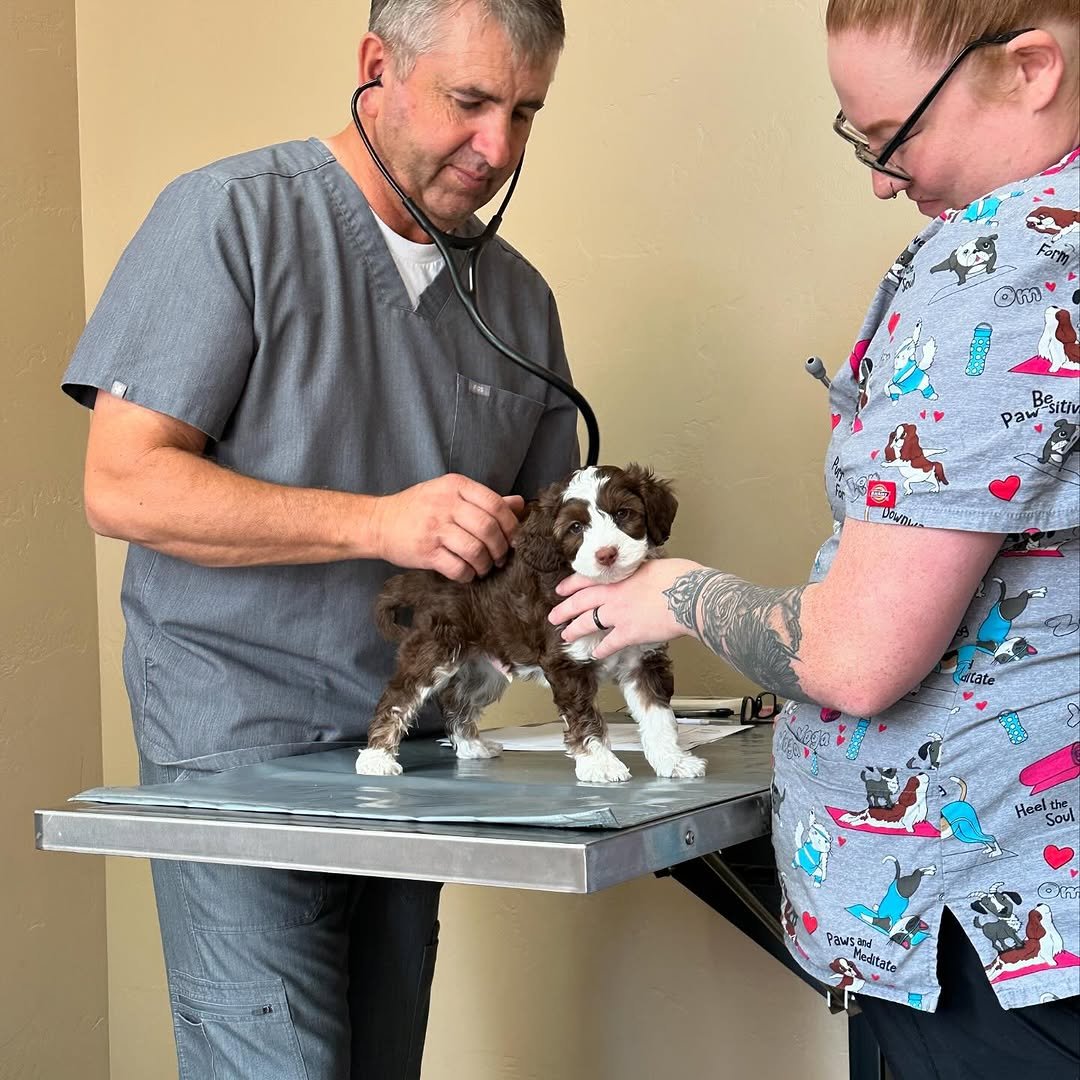
Beyond initial health testing of breeding dogs, ongoing veterinary care plays an important role throughout our program. This includes regular wellness visits for our adult dogs, attentive prenatal and postnatal care for mother dogs, and a structured veterinary care schedule for puppies. See our puppy health & vaccination FAQ for what each puppy comes with.

Questions to Ask Any Breeder
Whether you are considering a puppy from Furry Friends HQ or any other breeder, we believe it is important for families to ask thoughtful questions before making a decision.
What health testing has been performed on the parent dogs?
A responsible breeder should be willing and able to provide documentation or details about health testing performed on parent dogs.
Where are puppies raised, and what does the environment look like?
Puppies raised in a home environment tend to develop into more confident, adaptable adult dogs than those raised in commercial settings.
What does the socialization process involve?
A structured socialization program that goes beyond basic feeding and cleaning is one of the most important things a breeder can offer.
How often are female dogs bred, and how much time is given between litters?
Responsible breeders give their female dogs adequate time to fully recover between litters — never breeding on every heat cycle.
What support is available after a puppy goes home?
A responsible breeder remains a resource for the life of the dog, not just until the sale is complete.
Can I speak with past puppy families?
Reputable breeders are often happy to connect prospective families with past adopters who can share their firsthand experience.