The Complete Labradoodle Breed Guide
Introduction
Few dogs have captured the hearts of American families quite like the Labradoodle. Part Labrador Retriever, part Poodle, and entirely lovable, this designer dog breed has become one of the most requested puppies in the country — and for good reason.
If you're researching Labradoodle puppies for adoption, you probably already have a few questions swirling around: How big will they get? Are they really hypoallergenic? Are Labradoodles good family dogs? This guide answers all of that and more.
We built this resource to be the only Labradoodle guide you need — covering temperament, size, grooming, training, health, and the true cost of ownership from puppyhood through the senior years. Whether you're a first-time dog owner or adding a second doodle to the family, you'll find real, practical answers here.
What Is a Labradoodle?
A Labradoodle is a crossbreed dog created by mating a Labrador Retriever with a Poodle. The goal was simple: combine the Labrador's warm, trainable temperament with the Poodle's low-shedding, allergy-friendly coat.
Labradoodles are not a purebred dog recognized by the American Kennel Club (AKC), but they are recognized by several designer-breed organizations, including the Australian Labradoodle Association of America. Because they're a cross rather than a stabilized breed, individual Labradoodle puppies can vary in size, coat type, and appearance — even within the same litter.
That variation is part of the charm. No two Labradoodles look exactly alike, but nearly all of them share the same friendly, food-motivated, people-first personality.
History and Origin
The Labradoodle's story began in Australia in 1989, when breeder Wally Conron of the Royal Guide Dog Association of Australia set out to create a guide dog suitable for a blind woman whose husband had allergies. Conron crossed a Labrador Retriever with a Standard Poodle, and the resulting puppy, named Sultan, had a low-shedding coat and the gentle, trainable nature guide dog work requires.
The success of that first litter sparked massive public interest. Within a few years, Labradoodles were being bred across Australia, the United Kingdom, and the United States, evolving from a working guide-dog project into one of the most popular family and companion breeds in the world.
Interestingly, Conron has spoken publicly about mixed feelings toward the breed's runaway popularity, noting that irresponsible breeding practices emerged as demand outpaced supply. That history is part of why choosing a responsible Labradoodle breeder matters so much today.
Why Labradoodles Were Developed
The original purpose behind the Labradoodle was purely practical: a hypoallergenic-leaning guide dog. Poodles were the obvious low-shedding candidate, but early guide dog users found Poodles alone weren't always suited to the working temperament guide dog training demands.
Labradors, on the other hand, were already the gold standard for guide and service work — intelligent, biddable, and steady under pressure. Combining the two breeds aimed to get the best of both: a coat that wouldn't trigger allergies, paired with a mind built for training.
That founding purpose still echoes in the breed today. Labradoodles are frequently used as therapy dogs, emotional support animals, and service dogs, in addition to being beloved family pets.
Australian Labradoodle vs. American Labradoodle
This is one of the most common points of confusion for new puppy families, so let's clear it up.
American Labradoodle (or simply "Labradoodle"): A straightforward cross of a purebred Labrador Retriever and a purebred Poodle, typically an F1 or F1B generation. Coat and temperament can vary more from puppy to puppy.
Australian Labradoodle: A more deliberately stabilized breed that, in addition to Labrador and Poodle, may include Cocker Spaniel, Irish Water Spaniel, and Curly Coat Retriever in its ancestry. Australian Labradoodles are bred across multiple generations (multigenerational) specifically to produce a consistent, low-shedding, wavy or curly coat and a predictable, gentle temperament.
In practice, most reputable Labradoodle breeders in the U.S. today work primarily with Australian Labradoodle bloodlines because they produce more predictable coats — a major advantage for families managing allergies.
F1, F1B, F2, and Multigenerational Labradoodles Explained
Generation labels tell you exactly what genetic mix a puppy carries, and they matter more than most buyers realize.
- F1 Labradoodle: First-generation cross — one purebred Labrador parent and one purebred Poodle parent. Coats can range from flat and shedding to loosely wavy.
- F1B Labradoodle: An F1 Labradoodle bred back ("B" for backcross) to a Poodle. This generation is roughly 75% Poodle, which usually produces a curlier, lower-shedding coat — often the best choice for allergy-sensitive families.
- F2 Labradoodle: Two F1 Labradoodles bred together. Coat and shedding can be unpredictable in this generation.
- F2B Labradoodle: An F2 Labradoodle bred back to a Poodle or an F1B, further increasing coat consistency.
- Multigenerational (Multigen) Labradoodle: The result of breeding Labradoodles to Labradoodles across three or more generations, selecting only for dogs with consistent low-shedding coats and stable temperaments each generation. Multigen Labradoodles offer the most predictable outcome for both allergies and personality.
If a hypoallergenic coat is your top priority, ask your Labradoodle breeder specifically about F1B or multigenerational puppies — the generation matters more than the "Australian" label alone.
Labradoodle Appearance
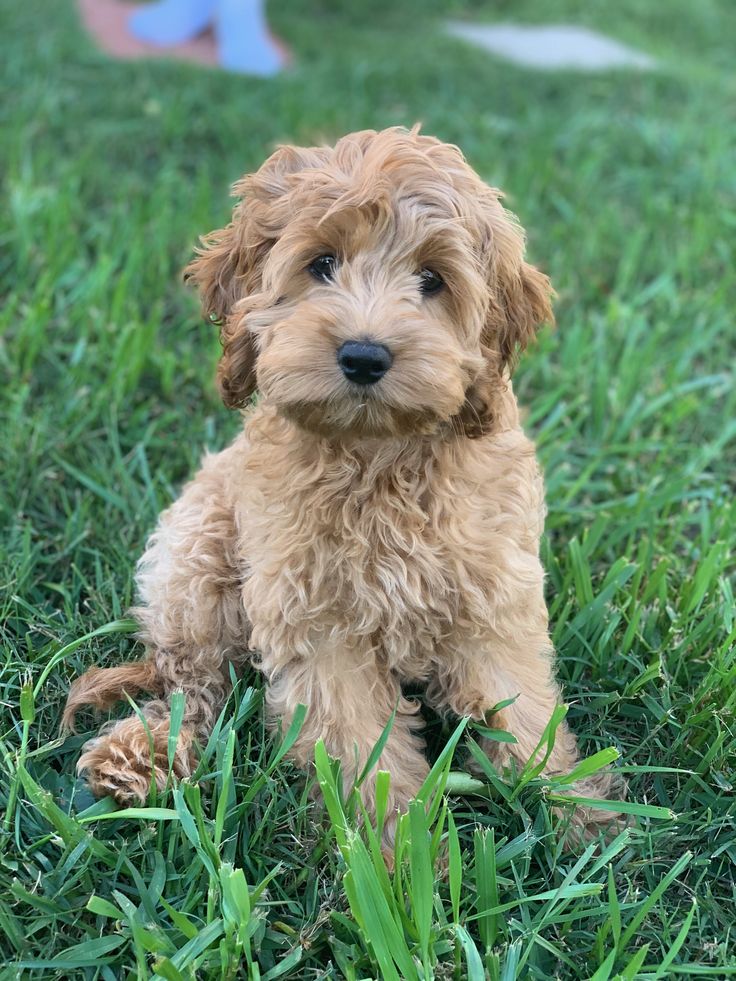
Labradoodles have an unmistakably shaggy, teddy-bear charm. They typically feature a square, athletic build, floppy ears, a broad head, and large, expressive eyes that give them their famously soulful expression.
Their coat is really what sets the look apart — anywhere from loose waves to tight curls — and it comes in a wide range of colors. Most Labradoodles have a slightly longer muzzle than a Poodle and a sturdier frame than the average curly-coated breed, a nod to their Labrador heritage.
Labradoodle Sizes
Labradoodle size largely depends on which size of Poodle was used in the cross — Toy, Miniature, or Standard.
Mini Labradoodle
Standing roughly 14–16 inches tall and weighing 15–25 pounds, the Mini Labradoodle is bred using a Miniature or Toy Poodle. Minis are ideal for apartment living and smaller households, though they still need daily exercise.
Medium Labradoodle
The Medium Labradoodle falls between 17–20 inches tall and 30–45 pounds. This size is popular for families who want doodle looks and temperament without a full Standard-sized dog.
Standard Labradoodle
The largest variety, Standard Labradoodles reach 21–24 inches tall and 50–65+ pounds, sometimes more for males. This size most closely reflects the original guide-dog Labradoodles and tends to have the most classic Labrador-like build.
Coat Types
Labradoodle coats generally fall into three categories:
- Wool coat: Dense, springy curls similar to a Poodle's coat. Low-shedding and considered the best option for allergy sufferers.
- Fleece coat: Soft, wavy to loosely curled texture — often considered the most classic "Labradoodle" look. Low to minimal shedding.
- Hair coat: Straighter and closer to a Labrador's coat. This type sheds more and is generally not recommended for allergy-sensitive homes.
Reputable breeders can usually predict coat type based on the parents' generation and coat history, which is another reason working with an experienced Labradoodle breeder pays off.
Coat Colors
Labradoodles come in an impressive range of colors, including:
- Cream
- Gold and apricot
- Red
- Chocolate
- Caramel
- Black
- Silver and blue
- Chalk/white
- Parti (two-tone) and phantom patterns
Coat color can shift as puppies mature — a dog born dark chocolate, for example, may fade to a lighter caramel or silver by adulthood, especially in wool-coated Labradoodles.
Temperament and Personality
Labradoodle temperament is, without question, the breed's biggest selling point. They're famous for being affectionate, social, playful, and eager to please — traits inherited straight from their Labrador side.
Most Labradoodles greet new people (and dogs) with genuine enthusiasm rather than suspicion. They tend to be gentle, goofy, and highly attuned to their family's emotions, which is exactly why they excel as therapy and emotional support dogs.
That said, temperament isn't purely a function of breed — early socialization and consistent training play a huge role in shaping the adult dog your puppy becomes.
Intelligence
Both parent breeds rank among the smartest dogs in the world, and Labradoodles inherit that brainpower. Poodles are widely considered one of the most intelligent dog breeds, and Labradors aren't far behind in trainability rankings.
This intelligence is a double-edged sword: Labradoodles pick up commands quickly, but they also get bored easily. Puzzle toys, scent games, and varied training routines help keep that sharp mind satisfied.
Trainability
Labradoodle training tends to go smoothly compared to many breeds, thanks to their people-pleasing nature and food motivation. Positive reinforcement — treats, praise, and play — works far better than harsh correction with this sensitive, eager breed.
Start Labradoodle puppy training early, ideally the day you bring your puppy home. Short, five-to-ten-minute sessions multiple times a day beat long, infrequent ones, especially for a puppy's short attention span.
Are Labradoodles Good Family Dogs?
Yes — Labradoodles are widely considered one of the best family dog breeds available today. Their combination of patience, playfulness, and low-aggression temperament makes them a natural fit for households of nearly any size or activity level.
They also tend to bond closely with every family member rather than fixating on a single "favorite person," which suits busy households well.
Are Labradoodles Good With Children?
Labradoodles are generally excellent with kids. Their sturdy build, playful energy, and patient temperament make them well-suited to the noise and unpredictability of family life.
As with any dog breed, supervision matters — especially with toddlers and very young puppies, who are both still learning boundaries. Teaching children how to approach, pet, and play with the dog respectfully prevents most issues before they start.
Are Labradoodles Good With Cats?
With proper introductions, most Labradoodles get along fine with cats. Their friendly, non-territorial nature works in their favor, though individual prey drive can vary, especially in puppies raised without early cat exposure.
Gradual, supervised introductions — using baby gates, scent swapping, and short controlled meetings — give the best chance of a peaceful multi-pet household.
Living With Other Dogs
Labradoodles are typically social, pack-friendly dogs that do well living alongside other dogs. Their playful, non-dominant temperament usually makes for smooth introductions, particularly when both dogs are properly socialized.
Apartment Living
Mini and Medium Labradoodles can thrive in apartments, provided their exercise and mental stimulation needs are met daily. Standard Labradoodles can also adapt to apartment life, though their larger size and higher energy make a house with yard access more comfortable long-term.
Regardless of size, apartment-dwelling Labradoodles need consistent walks, play sessions, and enrichment to prevent boredom-driven behaviors like chewing or excessive barking.
Exercise Requirements
Most Labradoodles need 45–60 minutes of physical activity per day, split across walks, play, and mental stimulation. Standard Labradoodles, closer to their working Labrador roots, often need the higher end of that range.
Good exercise options include:
- Daily walks or jogs
- Fetch and retrieving games
- Swimming (many Labradoodles love water)
- Off-leash play in a securely fenced area
- Puzzle feeders and scent work for mental exercise
Daily Routine
A predictable daily routine helps Labradoodles feel secure and reduces anxiety-driven behavior. A typical day might include a morning walk, structured feeding times, a midday play or training session, an afternoon nap, and an evening walk before wind-down time.
Consistency in feeding, potty breaks, and exercise timing is especially valuable during the puppy and adolescent stages.
Nutrition Guide
High-quality Labradoodle puppy care starts with the right diet. Look for a dog food formulated for your Labradoodle's current life stage (puppy, adult, or senior) and size category, with real meat listed as the first ingredient.
Because Labradoodles — especially Standard-sized ones — can be prone to weight gain, portion control matters as much as food quality. Avoid free-feeding, and always transition to a new food gradually over 7–10 days to prevent digestive upset.
Feeding Schedule
- 8–12 weeks: 4 meals per day
- 3–6 months: 3 meals per day
- 6–12 months: 2 meals per day
- Adult (1+ years): 2 meals per day, consistent timing
Always follow the feeding guidelines on your specific puppy food, and check in with your veterinarian if your Labradoodle seems consistently under or overweight.
Grooming Requirements
Labradoodle grooming is a real commitment, not an occasional chore. Because of their curly or wavy coat, regular brushing — ideally every one to three days — prevents painful mats and tangles, especially behind the ears, under the legs, and around the collar area.
Most Labradoodle owners schedule a professional groomer visit every 6–8 weeks for trimming, sanitary clips, and a deep de-shedding brush-out.
Coat Maintenance
Beyond brushing, Labradoodle coat maintenance includes:
- Bathing every 3–4 weeks (over-bathing can dry out skin)
- Using a slicker brush and metal comb to reach the undercoat
- Detangling spray for stubborn mats
- Regular trims to keep length manageable, especially around the eyes and paws
Nail Care
Trim your Labradoodle's nails every 3–4 weeks, or whenever you hear them clicking on hard floors. Overly long nails can alter a dog's gait and cause joint discomfort over time.
Ear Care
Labradoodles' floppy ears trap moisture and warmth, creating an environment where yeast and bacterial infections thrive. Check and gently clean ears weekly with a vet-approved cleanser, and always dry ears thoroughly after swimming or baths.
Dental Care
Brush your Labradoodle's teeth two to three times per week using dog-safe toothpaste, and consider dental chews or professional cleanings as recommended by your vet. Good dental hygiene prevents periodontal disease, a common issue in mid-to-large breed dogs as they age.
Shedding
One of the biggest draws of the Labradoodle is minimal shedding — particularly in wool- and fleece-coated dogs. However, "low-shedding" isn't the same as "no-shedding," and hair-coated Labradoodles shed noticeably more than their curlier littermates.
Regular brushing actually reduces visible shedding by capturing loose hair before it falls around the house.
Are Labradoodles Hypoallergenic?
No dog breed is 100% hypoallergenic, including Labradoodles — but many Labradoodles, particularly F1B and multigenerational dogs with wool or fleece coats, produce significantly less dander and loose hair than most breeds. Since pet allergies are largely triggered by dander (not fur itself), a low-shedding coat can meaningfully reduce allergic reactions for many people.
If allergies are a serious concern, spend time with the specific puppy (or its parents) before adopting, and ask your Labradoodle breeder about coat type and generation, since these factors affect allergen levels more than the "Labradoodle" label alone.
Puppy Socialization
The socialization window — roughly 3 to 14 weeks of age — is the single most important period for shaping a confident, well-adjusted adult Labradoodle. Expose your puppy to new people, sounds, surfaces, and (fully vaccinated) dogs during this window.
Puppy kindergarten classes are an excellent, structured way to build these experiences safely.
Crate Training
Crate training gives your Labradoodle puppy a safe, den-like space and is one of the most effective tools for both house-training and anxiety prevention. Introduce the crate gradually and positively — never as punishment — using treats, meals, and short positive stays before working up to longer periods.
Potty Training
Consistency is everything with Labradoodle potty training. Take your puppy out first thing in the morning, after meals, after naps, after play, and right before bed. Reward successful outdoor bathroom breaks immediately with praise or a small treat.
Most Labradoodle puppies are reliably house-trained between 4 and 6 months of age, though every dog progresses at its own pace.
Basic Obedience Training
Start with foundational cues: sit, stay, come, down, and leave it. Labradoodles' intelligence and food motivation make these commands relatively fast to teach, particularly with short, positive, reward-based sessions.
Enrolling in a puppy obedience class also supports socialization goals at the same time.
Common Behavioral Problems
Even a naturally good-natured breed like the Labradoodle can develop behavioral issues without proper structure. Common challenges include:
- Jumping on guests (rooted in over-excitement, not aggression)
- Excessive barking from boredom or under-stimulation
- Chewing, especially during teething
- Counter-surfing, given their food motivation
- Mouthing or nipping in puppyhood
Most of these resolve with consistent training, adequate exercise, and mental enrichment.
Separation Anxiety
Labradoodles' strong attachment to their families is a wonderful trait — but it can also make them prone to separation anxiety if alone time isn't introduced gradually. Signs include destructive chewing, excessive barking, pacing, or accidents despite being house-trained.
Build independence slowly: start with brief absences and gradually extend them, and avoid dramatic hellos and goodbyes that heighten anxiety around your departures.
Health Issues
Labradoodles are a generally healthy breed thanks to hybrid vigor, but they can inherit conditions from either parent breed, including:
- Hip and elbow dysplasia
- Progressive retinal atrophy (PRA)
- Ear infections
- Addison's disease
- Hypothyroidism
- Von Willebrand's disease (a clotting disorder)
- Epilepsy
Choosing a Labradoodle breeder who health-tests parent dogs dramatically reduces the risk of these inherited conditions.
Genetic Testing
Responsible breeders test parent dogs for conditions common to Labradors and Poodles, including hip and elbow scores through the Orthopedic Foundation for Animals (OFA), eye clearances, and DNA panels for conditions like PRA and Von Willebrand's disease. Always ask your breeder for documentation of these tests before adopting.
Vaccinations
Puppies typically begin their vaccination series around 6–8 weeks old, with boosters continuing every 3–4 weeks until about 16 weeks of age, covering core vaccines like distemper, parvovirus, and rabies. Your veterinarian will provide a schedule tailored to your Labradoodle puppy and your region.
Deworming
Puppies are commonly dewormed starting at 2–3 weeks of age and repeated every two to three weeks through about 12 weeks old, since intestinal parasites are extremely common in young puppies. Your vet will guide ongoing deworming based on fecal testing.
Parasite Prevention
Year-round flea, tick, and heartworm prevention is strongly recommended for Labradoodles, particularly given their active, outdoor-loving nature. Ask your veterinarian about the best preventative option for your climate and lifestyle.
Veterinary Care
Schedule wellness exams at least once a year for adult Labradoodles (twice yearly for seniors), along with routine bloodwork to catch developing issues early. Puppies need more frequent visits during their first year for vaccines and growth monitoring.
Labradoodle Lifespan
Labradoodles typically live between 12 and 15 years, with Mini and Medium Labradoodles often on the longer end of that range compared to Standards — a common pattern across dog breeds where smaller size correlates with longer lifespan.
Cost of Owning a Labradoodle
Labradoodle puppies for sale from reputable, health-tested breeders typically range from $1,500 to $4,000+, depending on generation, coat type, and bloodline. Beyond the adoption cost, first-year expenses — supplies, vaccinations, spay/neuter, and food — commonly add another $1,000–$2,500.
Ongoing annual costs, including food, grooming, routine vet care, and preventatives, generally run $1,500–$3,000 per year, with professional grooming being one of the biggest recurring line items for this breed.
Essential Puppy Supplies
Before bringing your Labradoodle puppy home, stock up on:
- Crate and comfortable bedding
- Puppy-appropriate food and treats
- Food and water bowls
- Collar, harness, and leash
- ID tag and microchip registration
- Slicker brush and metal comb
- Puppy-safe chew toys
- Enzymatic cleaner for accidents
- Baby gates for containment
Traveling With Your Labradoodle
Labradoodles generally travel well thanks to their adaptable temperament. For car rides, use a secured crate or dog seatbelt harness, and never leave your dog unattended in a parked vehicle.
For air travel or long road trips, plan ahead for pet-friendly accommodations and pack familiar items like their bed and favorite toy to ease travel stress.
Seasonal Care
In summer, watch for overheating — Labradoodles' curly coats can trap heat, so avoid midday exercise during peak temperatures and always provide shade and water. In winter, their coat offers some insulation, but short-haired or freshly groomed dogs may need a jacket in extreme cold.
Year-round paw care, including checking for ice buildup or hot pavement, protects sensitive paw pads in any season.
Senior Labradoodle Care
As Labradoodles enter their senior years (typically around age 8+), watch for signs of joint stiffness, vision or hearing changes, and shifts in appetite or energy. Senior-formula food, joint supplements, and more frequent vet checkups all support healthy aging.
Gentle, low-impact exercise like shorter walks or swimming helps maintain mobility without overstressing aging joints.
Frequently Asked Questions
1. How big do Labradoodles get? Depending on size category, Labradoodles range from 15–25 pounds (Mini) up to 65+ pounds (Standard).
2. Do Labradoodles shed? Wool- and fleece-coated Labradoodles shed minimally; hair-coated Labradoodles shed more noticeably.
3. Are Labradoodles hypoallergenic? No dog is 100% hypoallergenic, but many Labradoodles produce significantly less dander than average, making them a popular choice for allergy-sensitive families.
4. How much exercise does a Labradoodle need? Most need 45–60 minutes of daily activity, combining walks, play, and mental stimulation.
5. Are Labradoodles easy to train? Yes — their intelligence and food motivation make Labradoodle training relatively straightforward with positive reinforcement.
6. Do Labradoodles bark a lot? Not typically, though under-stimulated or anxious Labradoodles may bark more than average.
7. How long do Labradoodles live? Most Labradoodles live 12–15 years, with smaller sizes often living slightly longer.
8. Are Labradoodles good with kids? Yes, their patient, playful temperament makes them one of the best family dog breeds for households with children.
9. Do Labradoodles need professional grooming? Most owners schedule grooming every 6–8 weeks in addition to at-home brushing several times a week.
10. What's the difference between an F1 and F1B Labradoodle? An F1 is a 50/50 Labrador-Poodle cross; an F1B is bred back to a Poodle, usually producing a curlier, lower-shedding coat.
11. Do Labradoodles like water? Many do — their Labrador heritage often gives them a natural love of swimming and water play.
12. Can Labradoodles live in apartments? Yes, especially Mini and Medium sizes, provided daily exercise needs are met.
13. What health problems are Labradoodles prone to? Hip/elbow dysplasia, ear infections, PRA, and a few inherited conditions from each parent breed — all reasons to choose a health-tested breeder.
14. How much does a Labradoodle puppy cost? Typically $1,500–$4,000+ from a reputable breeder, depending on generation and bloodline.
15. Do Labradoodles get along with cats? Generally yes, especially with gradual introductions and early socialization.
16. How often should I feed my Labradoodle puppy? Puppies eat 3–4 times daily, tapering to 2 meals per day by adulthood.
17. What coat colors do Labradoodles come in? Cream, gold, apricot, red, chocolate, caramel, black, silver, and parti patterns, among others.
18. Are Australian Labradoodles different from regular Labradoodles? Yes — Australian Labradoodles include additional breeds in their ancestry and are bred across multiple generations for coat and temperament consistency.
19. When should I start training my Labradoodle puppy? Immediately — Labradoodle puppy training should begin the day you bring your puppy home.
20. Do Labradoodles have separation anxiety? They can, given their strong attachment to family, but gradual alone-time training helps prevent it.
21. What is the best size Labradoodle for a family? It depends on space and activity level — Minis suit apartments, while Standards suit active households with yard space.
22. How do I find a reputable Labradoodle breeder? Look for health testing documentation, clean facilities, and breeders willing to answer detailed questions about generation and lineage.
Conclusion
Labradoodles genuinely earn their reputation as one of the best family dog breeds in America — combining a low-shedding coat, sharp intelligence, and an endlessly affectionate personality into one unmistakably lovable package. From puppyhood training through senior-year care, they reward the right amount of structure and love with a lifetime of loyalty.